- Home
- Classic cars
Classic cars, handled with care.
From the car you bring out every spring to the one that's been sitting too long. Maintenance, repairs and body work for classic and collector cars, right here on Yonge Street.
- Maintenance and repairs
- Body work and paint
- Storage and spring tips
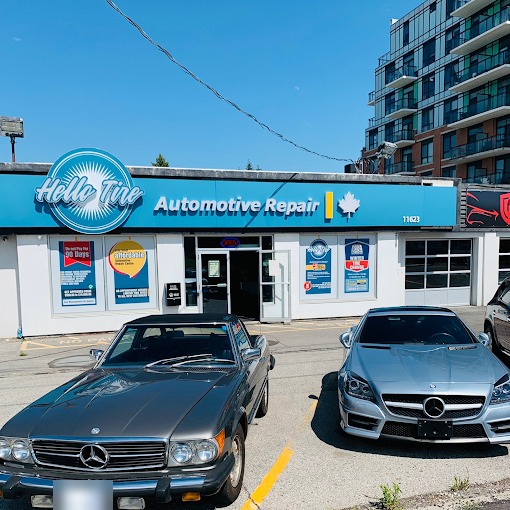
What we do for classic cars
Older cars need a steady hand and straight advice. We check the whole car, tell you what needs fixing now, what can wait and what's fine, and you see the price before we pick up a wrench.
Maintenance and tune-ups
Oil and filter changes, ignition, fluids, belts and hoses.
Brakes
Pads, shoes, drums, rotors, lines and fluid. Brake fluid absorbs moisture over time, so change it on schedule.1
Cooling system
Radiators, hoses, water pumps and thermostats.
Suspension and steering
Worn bushings, ball joints, shocks and steering parts replaced.
Electrical
Wiring, charging, lighting and gauges traced and repaired.
Body work and paint
Dents, scratches, panels and paint, finished to match.
Tires and wheels
Tires age even when they sit. Have them inspected every year once they are 5 years old, and replace them 10 years after they were made.2
Getting ready for winter storage
Hagerty, the classic car insurer, recommends these steps before a car goes away for the winter.3
- Fill the tank, ideally with non-ethanol fuel, add a fuel stabilizer, and run the engine for a few minutes to get the stabilized fuel into the system.3
- Change the oil and filter, and double-check the antifreeze level.3
- Remove the battery to somewhere it won't freeze, or keep it charged with a battery maintainer.3
- Add a little extra air to the tires. Jack stands are only worth it if the car will sit for half a year or longer.3
- Cover the exhaust pipe and air inlet so critters can't crawl in, and use a car cover.3
Waking it up in spring
Before the first drive of the season:
- Check the tire pressure with the tires cold.4 Tires 5 years or older should be inspected every year.2
- Have the brake fluid checked. Brembo suggests changing it every 2 to 3 years unless your maker says otherwise.1
- Have the battery tested. CAA recommends testing at least twice a year.5
- Check the engine oil, brake, transmission and power steering fluid levels.6
Historic plates in Ontario
Under Ontario's vehicle permit rules, a historic vehicle is one that:7
- Is at least 30 years old.
- Is substantially unchanged or unmodified from the original manufacturer's product.
- Is driven on the road only in parades, for exhibitions, club tours or similar events, or for repair, testing or demonstration for sale.
- Doesn't have year-of-manufacture plates attached.
Classic car questions
Straight answers to what owners ask us.
Do you work on classic and collector cars?
Yes. If it's auto repair, we do it: maintenance, repairs, brakes, cooling, electrical, suspension, tires, body work and paint.
Should a classic that barely moves get new tires?
Tires age even when unused. Have them inspected every year once they are 5 years old, and replace them 10 years after they were made, whatever the tread looks like.
What counts as a historic vehicle in Ontario?
At least 30 years old, substantially unchanged from the original, and driven only for parades, exhibitions, club tours and similar events, or for repair, testing or demonstration for sale.
Sources
The facts on this page come from these sources. The small numbers in the text link here.
- Brembo: Brake fluid: when changing it saves the whole team
- Michelin Canada: When to replace tires
- Hagerty: How to: classic car winterization and storage
- Transport Canada: Riding on air: tire pressure and tread
- CAA Niagara: How to make your car battery last longer
- Pennsylvania Driver and Vehicle Services: Vehicle maintenance checklist
- Government of Ontario: R.R.O. 1990, Reg. 628: Vehicle permits (definition of historic vehicle)
Bring your classic in.
Tell us about the car and what it needs. We'll call you back to set a time.